Corset Material Guide: What Fabric to Use?
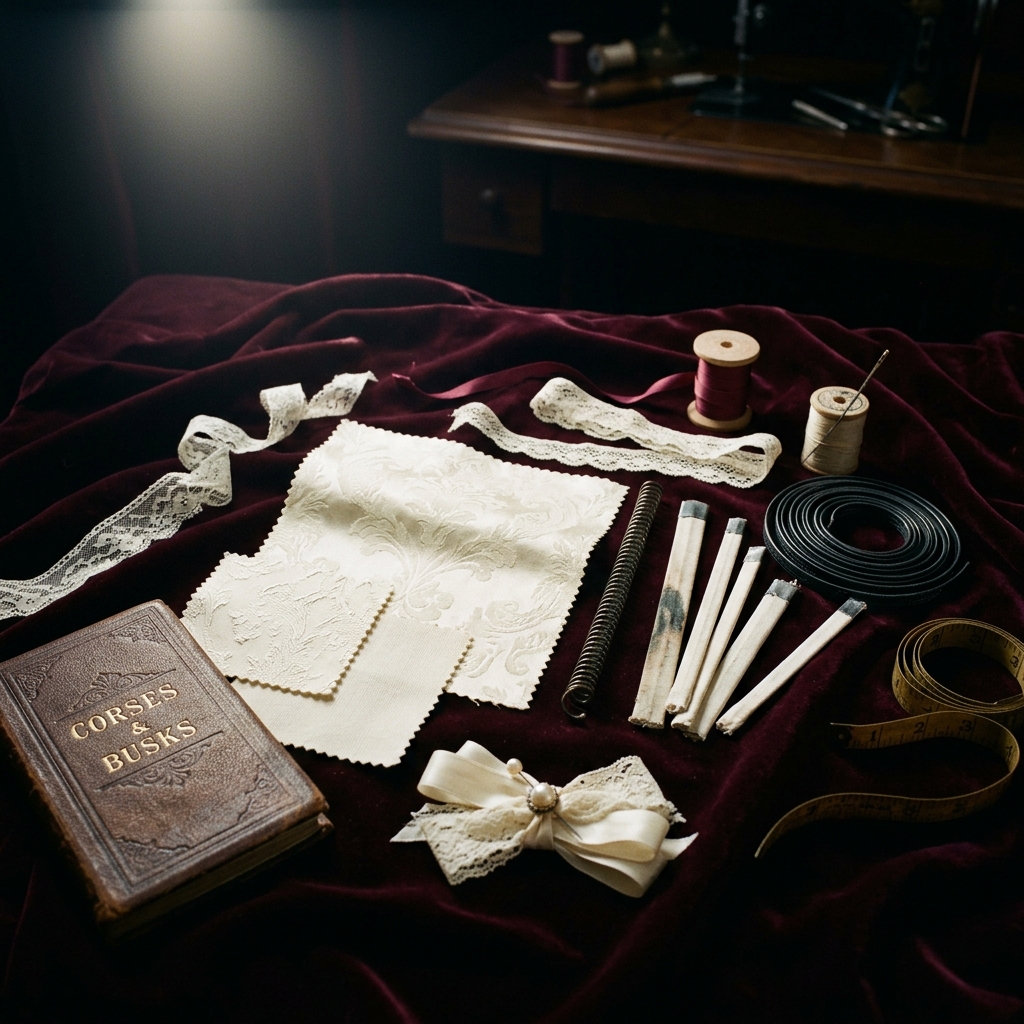
Making your own corset is the pinnacle of slow sewing. Not only does it require absolute precision, but your choice of fabric can make or break the structure. The outer layer might look beautiful, but what happens underneath is where the magic (and the support) actually lives.
Understanding the Structure
A traditional corset is composed of three distinct layers:
- The Fashion Fabric (Outer): The face of your creation.
- The Core/Strength Layer: The architectural foundation that holds the tension.
- The Lining: The soft layer closest to your skin.
The Ultimate Strength Layer: Coutil
If there is one absolute rule in corsetry, it’s this: Use Coutil for your strength layer.
Coutil is a specialized, very densely woven cotton fabric designed specifically for corsetry. It has virtually zero stretch on any grainline. Without coutil, the tension of the laces will stretch and warp the fabric, permanently ruining the shape of your corset after just one wear. If you cannot find coutil, a heavy cotton drill or densely woven canvas can act as a substitute, but it will never perform identically.
The Fashion Fabric
Your outer layer is purely aesthetic, meaning you can use silk, satin, velvet, or brocade. However, if your fashion fabric is very thin or fragile (like silk charmeuse), you MUST fuse it to a lightweight cotton woven interfacing before mounting it onto your coutil. Otherwise, the structural boning channels will show through and wrinkle the delicate silk.

Why Corset Patterns Must Be Custom
A corset works by mapping tightly to the extreme curves of the bust and waist. A standard-sized corset pattern simply will not fit because no two rib cages are identical. Using our parametric corset generator, the algorithm perfectly maps the multiple vertical panel seams to envelop your exact bust-to-waist ratio.
Parametric Corset Pattern
Stop adjusting darts. Generate a corset fitted exclusively for your body.